What the glass is telling you
Mineral spotting is one of the main conditions to watch for on elevated glass. Wyoming Water Development data for the Gillette Project reports raw water hardness of 1,200 to 2,400 ppm in the Madison Formation supply. If water from that supply contacts the glass, that hardness is relevant because the minerals can leave visible spotting behind as the water dries.
From the ground, spotting can be easy to misread. The viewing angle changes, upper floors catch light differently, and access is limited. We look at where the marks appear and which drops need attention rather than treating the whole elevation as if every pane has the same exposure. A clear picture of the affected glass also helps us decide how the crew can reach it safely.
The access method comes first
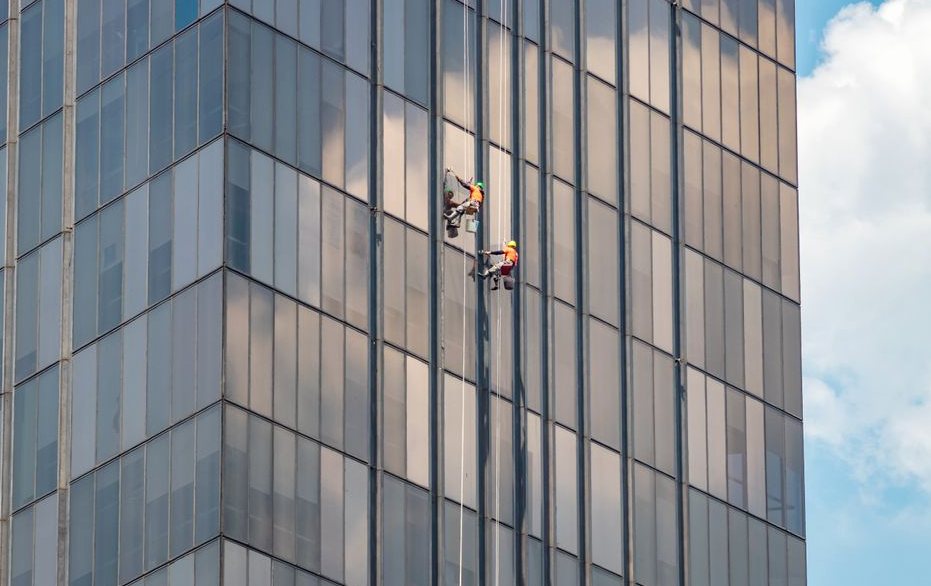
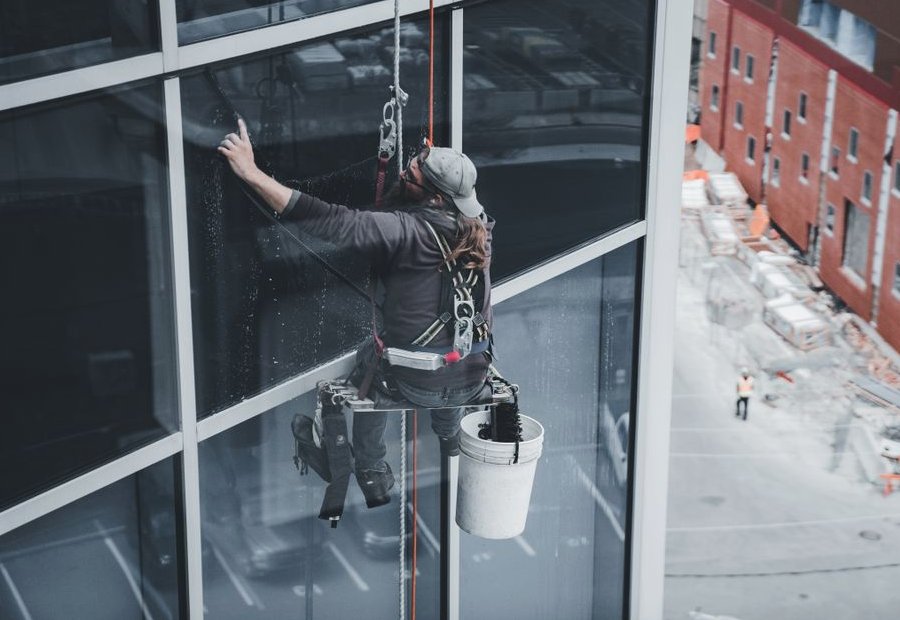
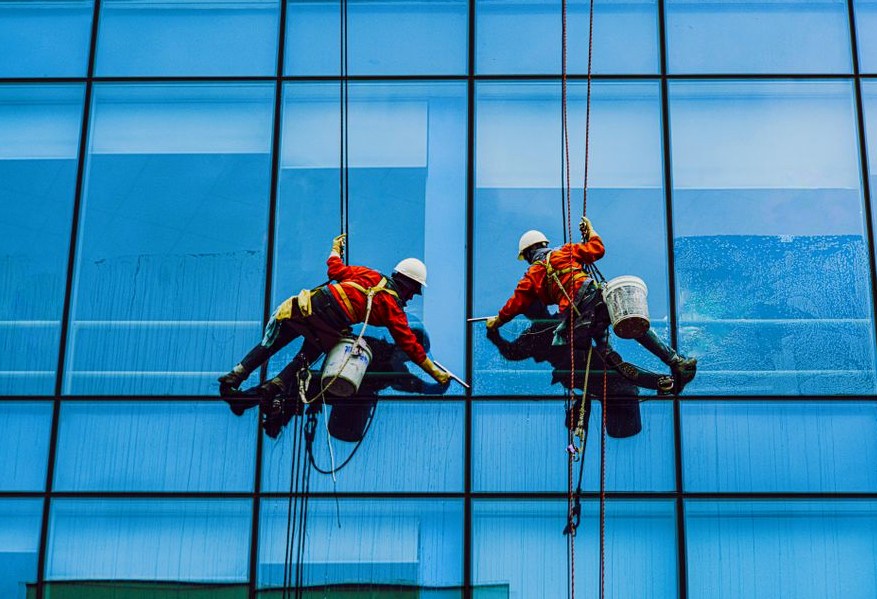
A bosun’s chair is a rope-descent system used to reach exterior glass from above. When that is the right approach, we rig from OSHA-compliant roof anchors. The anchor points are independently inspected, and the system includes back-up fall-arrest lines. Those details are not side notes. They are the foundation of the work plan.
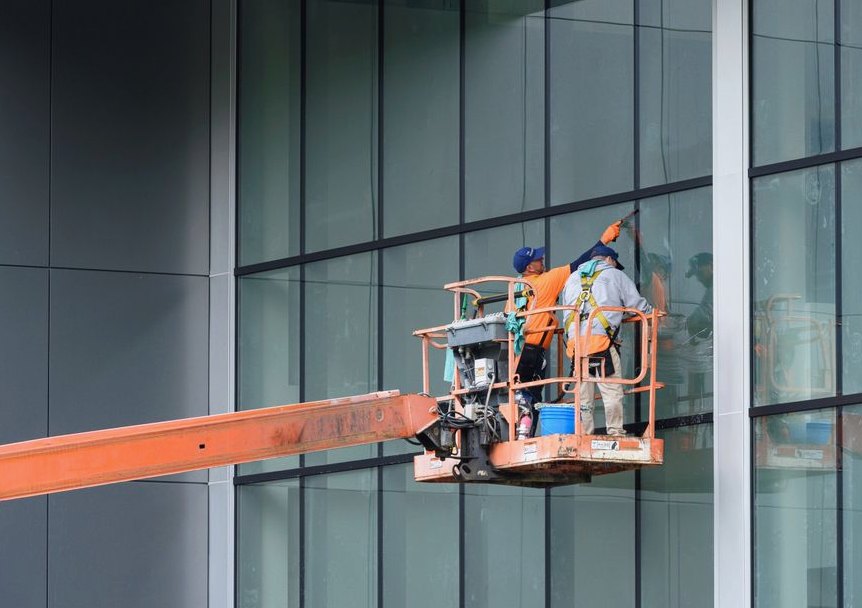
A chair is not automatically the right tool just because the windows are high. Some drops make rope descent unsafe or impractical. In those cases, we position an aerial lift instead. Our decision starts with the actual access conditions: whether a workable rope descent can be established, whether the anchor points support that plan, and whether the crew can reach the intended glass without forcing the wrong method onto the building.
Rope work follows the weather
We schedule rope work drop by drop around usable weather windows. Wind can affect one side of a building differently from another, so a calendar date alone does not settle the plan. If the wind is unsafe for a rope drop, we do not put a technician over the edge. The work waits for an appropriate window or moves to a drop that can be handled safely under the conditions.
Freeze risk is also high in Gillette. Routine exterior glass work pauses during hard freezes, which pushes more of the schedule into the shoulder seasons and warmer route months. Spring weather windows here are notoriously narrow and weather-sensitive—the Gillette soil-temperature page notes that cool-season grasses need soil at 2 inches to stay between 50°F and 65°F for several consecutive days just to germinate. We treat our exterior access windows with the same strict attention to local conditions.
When an aerial lift changes the cost
When a bosun’s chair is not safe or practical, an aerial lift crew costs $250 to $500 per hour, with the operator included. Because that is an hourly crew rate, the amount attributable to lift work depends on how many operating hours the job requires. We identify the access method before presenting lift time as though it were a minor add-on.
The important distinction is between the cleaning need and the way the crew reaches it. Two buildings can have similar-looking glass but require different access plans. One may support properly anchored rope descent, while another calls for aerial lift positioning. That choice affects the crew arrangement and, when a lift is used, introduces the stated hourly range. We explain which method applies so the access cost has a clear reason behind it.
Questions to settle before scheduling
Property owners often ask whether every elevation must be handled the same way. No assumption should be made before the access plan is reviewed. Rope descent may be practical for one drop while another requires lift positioning. Weather can also split the work across different windows because we never continue rope operations in unsafe wind.
Another common question is when to reserve the work. Hard freezes interrupt routine exterior cleaning, so shoulder-season and warmer-month routes carry more of the schedule. If you know of specific water contact or recurring mineral spotting from the Madison Formation supply, tell us during scheduling. Those details help us focus on the affected windows and plan the safest practical way to reach them.
Working Around Gillette
A few Gillette conditions we plan around on every job:
Climate
- Low annual precipitation and blowing basin dust leave a fine film on commercial storefront glass faster than in wetter regions.
- Freeze risk is high; routine exterior glass work pauses during hard freezes and concentrates in the shoulder seasons and warmer route months.
- Spring through early fall are the heavy commercial route months, once overnight temperatures stay reliably above freezing.
- Cold semi-arid (BSk) high-plains climate: long, cold winters and warm, dry summers in the Powder River Basin.
Soil & Ground
- Powder River Basin high-plains terrain with alkaline, dusty soils that wind carries onto building exteriors.
- Semi-arid ground cover means wind-blown dust, not rain, is the main thing dirtying exterior glass here.
Local Notes
- The I-90 and US-14/16 commercial corridors and downtown carry the retail and office glass that drives storefront route demand.
- Population is roughly 33,000 and Gillette is the trade center for a wide rural catchment, so commercial cleaning demand concentrates in town.
- Serving Gillette, WY and the surrounding Campbell County communities.
- Gillette is the seat of Campbell County and the commercial hub of Wyoming's Powder River Basin, long branded the "Energy Capital of the Nation."
What the Work Involves
A few photos representative of the work.
How It Works
-
Call or Text
Tell us what you need done and when — you'll get a straight answer, not a sales pitch.
-
Free On-Site Quote
We size up the work in person — access, scope, and timing — so the quote is real, not a guess.
-
Written Quote
You get the scope and the price in writing before any work starts. No surprises.
-
The Job, Done Right
We do the job right the first time, clean up after ourselves, and stand behind the work.
What this typically involves:
- Access and safety walk before any quote: count the glass, map elevations and roof anchor points, and set the fall-protection approach before a crew is scheduled
- Pure-water fed-pole cleaning from the ground for reachable elevations, leaving glass to sheet-dry spot-free without soap residue
Pricing Ranges
These are planning ranges. Nothing is final until it is in writing.
$8–$20
$5–$15
Questions Gillette Customers Ask
Are you insured, and does that matter for a commercial job?
It matters a great deal. Reputable commercial window cleaners carry general liability and workers' compensation, which protects your business if a worker is injured on your property or something is damaged. Always ask for a certificate of insurance before letting a crew work at height on your building.
How do you clean windows safely at height?
Upper-story work is done by rope descent rigged to roof anchors under OSHA rope-access standards, or from an articulating aerial lift when that is the safer tool. Ladders are limited to one- and two-story storefront work with proper stabilizers. The access method is decided on the safety walk, not improvised on the day.
What is post-construction window cleaning and why does it cost more?
After a build or remodel, glass is usually coated in paint splatter, stucco, silicone, and adhesive labels that a normal wash won't remove. Post-construction cleaning means scraping each pane with a flat razor and detailing frames before the final wash, which is slower and harder on materials, so it is priced per pane above routine service.
Will you clean windows in winter?
Routine exterior work pauses during hard freezes because water freezes on the glass, but we schedule around the weather and catch up in the shoulder seasons and warmer route months. Interior cleaning and many storefront jobs continue year-round.
How much does commercial window cleaning cost?
Small storefront stops often run $20 to $60, a full mid-size building exterior and interior can run several hundred dollars, and high-rise glass is usually priced per pane. The real drivers are the number of panes, the height and access, and whether frames, sills, and screens are included. A walk-through and pane count give an accurate number; be cautious of a price quoted sight-unseen.
Do I need to be on site while you clean?
Exterior work rarely needs anyone present beyond confirming access and parking. Interior work needs someone to let the crew in and point out any sensitive areas. Route customers usually give us a standing access arrangement so we can service the stop without a call every time.
Can you set up a recurring service schedule for my properties?
Yes, and most commercial clients prefer it. A signed route schedule locks in a consistent crew, a set price, and a predictable interval, and we leave a service log at each stop so property managers can see the work was done. It also usually costs less per visit than one-off calls.
Other Things People Ask
How long does a commercial window cleaning job take?
A single storefront can be minutes; a full office building exterior and interior can take a crew most of a day. High-rise work is scheduled in drops and can span multiple days depending on the elevation count and weather windows for rope access.
What areas and building types do you service?
Storefronts, offices, restaurants, hotels, dealerships, medical buildings, and industrial and municipal facilities are all standard commercial work. If a building has glass and safe access, we can quote it, and we handle both one-time cleans and recurring route contracts.
How often should a commercial building have its windows cleaned?
Most storefronts and offices land on monthly or quarterly service. High-traffic retail, restaurants, and car dealerships often go weekly or bi-weekly because handprints and street grime show fast, while a low-traffic office park may be fine quarterly. We set the interval to how quickly your glass actually shows dirt, not a one-size schedule.
What is water-fed pole cleaning and why do you use it?
A water-fed pole feeds purified water up a long carbon-fiber pole to a brush head, so a technician cleans upper-story glass from the ground. The water is run through reverse osmosis and deionization until it is pure, which means it dries with no spots and no detergent film. It is safer than ladders on upper floors and leaves frames and sills cleaner too.
Our Service Area
Crews serve Gillette, WY. Call (307) 670-7443 to confirm coverage for your address.
Other Services We Offer
Where We Stand Before You Call
Free Estimates
Call (307) 670-7443 for a free estimate.